TL;DR
- Light, damp and the adhesive you choose age a keepsake book faster than time does. Paper is the easy part.
- Write with a quick-drying archival pen, attach prints at the corners with photo-safe adhesive, and keep the book flat in its box, out of the sun.
- Photograph the finished spreads once a year. A backup is what makes the original safe to hand over.
What actually damages a keepsake book?
Sunlight, damp and heat, roughly in that order, plus whatever you used to stick the photos down. Time on its own is gentle. A sunny shelf is not.
The two places people store keepsakes are the two worst places in the house. An attic cooks in summer. A basement swings between damp and dry, and paper moves with it. A closed box on a shelf in a room you heat and live in is boring, and it is the answer.
Does the paper really matter?
Yes, and it is the one thing you cannot change after buying. Two properties do the work. Acid-free is the standard to look for in anything meant to last, and thickness decides whether a page can be written on at all.
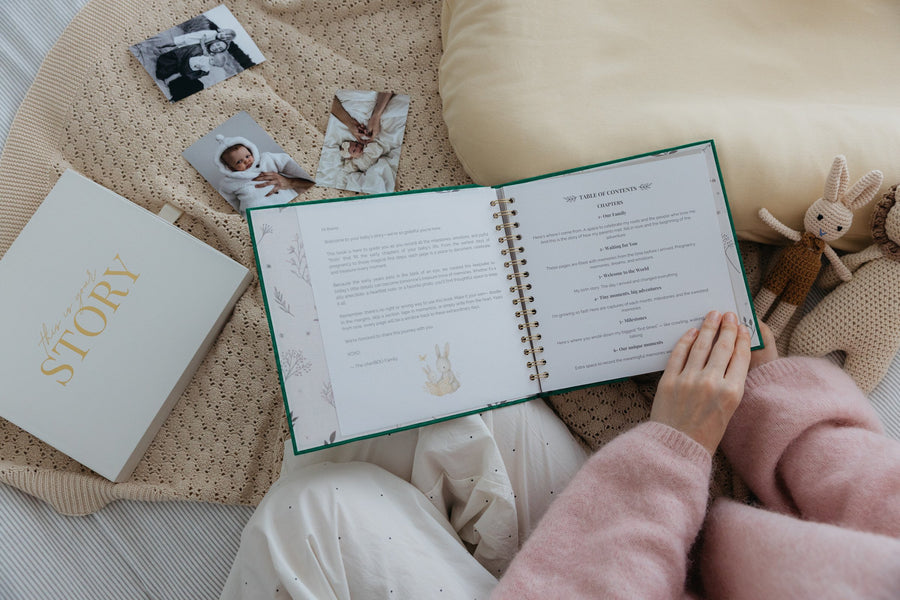
Thin paper telegraphs. You write on one side and the words print faintly through to the next page, which is where a book starts to look tired. The CheriBOO book uses thick 160 gsm acid-free paper that keeps ink from showing through, and a hidden gold coil binding that opens fully flat, so you are never pressing a curved page down with your wrist while the pen bleeds.
Which pens are safe to write with?
Any archival, quick-drying pigment pen, and one of them for the whole book. Five rules cover most of it:
- Look for archival or pigment on the barrel. Those inks are made to stay where you put them.
- Avoid gel ink that stays wet on the surface. It smears under a hand and can transfer onto the facing page when the book closes.
- Test on a free page in chapter 6, pages 113 to 121, and not on the family tree on page 8.
- Give a page a minute before closing it. The book lies fully flat, so leaving it open on the table costs nothing.
- Use the same pen throughout if you can. Two different blacks never quite match, and five years of one hand in one ink reads better than a patchwork.
Can I write in it with a normal ballpoint pen?
Yes. A ballpoint is fine on the writing lines. If you want to be careful, look for a pen marked archival or pigment, and give the ink a minute before you close the book.
How should I attach the photos?
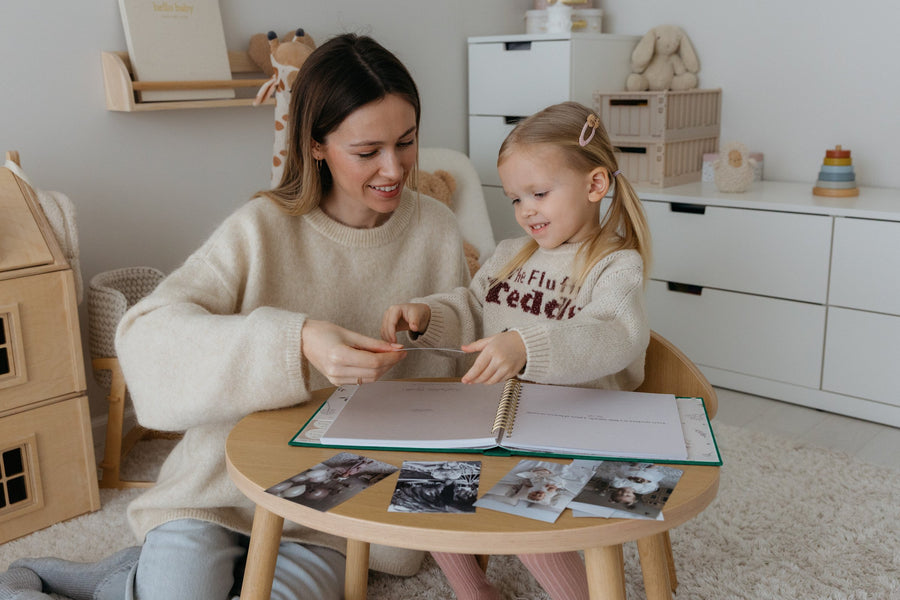
Lightly, at the corners, with something you could undo. The book has 61 photo spaces with no fixed frames and no plastic sleeves, which means you get to choose the layout and you also get to choose the adhesive. 4x4 and 4x6 prints fit everywhere and some spots take up to 6x6.
Tape, glue dots or any paper glue all work, and none is included in the box, so buy one and keep it there. Small amounts at the corners beat a full coat of glue: a print you can lift is a print you can replace when you find a better one. Label the back of each print in pencil with the date before it goes down, because in five years the photo on the page will be identified only by what you wrote around it.
Is tape safe for photos?
Tape holds well and it is what most people have in a drawer. If the print matters, use photo-safe tape or glue dots at the corners, so the photo can be lifted later without taking the page with it.
Will the printed photos last?
Printed photos generally outlive the phone they came from, which is the real argument for printing them at all. A few habits improve the odds without much effort.
- Order prints from a photo lab rather than a home printer when you can.
- Keep the digital originals in two separate places, not only on the phone that took them.
- Let prints dry and settle before gluing them into a book that then sits closed.
- Keep the book out of direct sun, which fades a print faster than it fades the linen.
Matte or glossy prints?
Either. Matte hides fingerprints, glossy shows more contrast. Pick one finish and stay with it, so the book looks like one object rather than a collection of print orders.
Where should the book live?
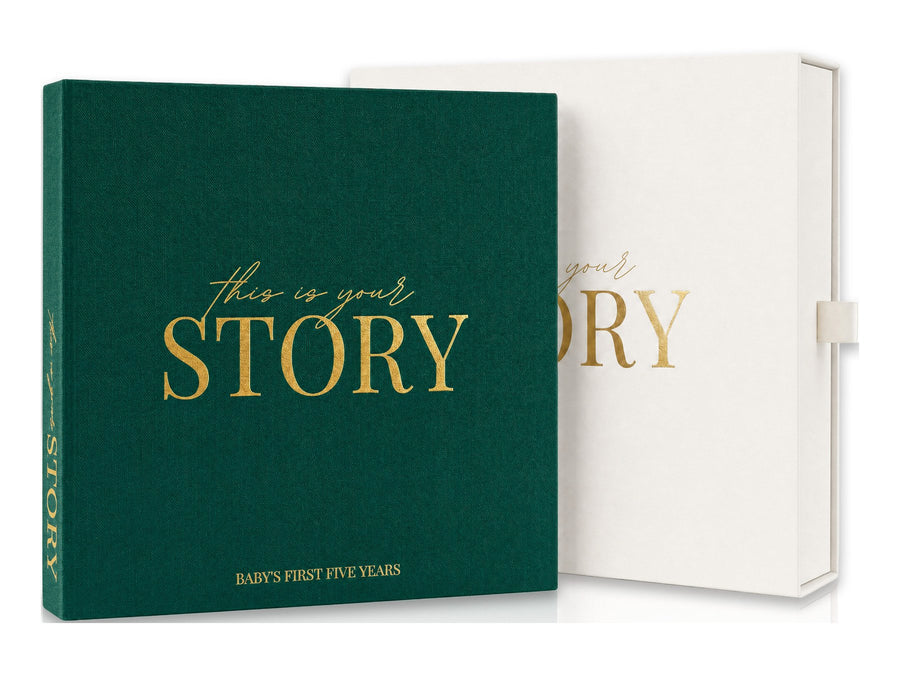
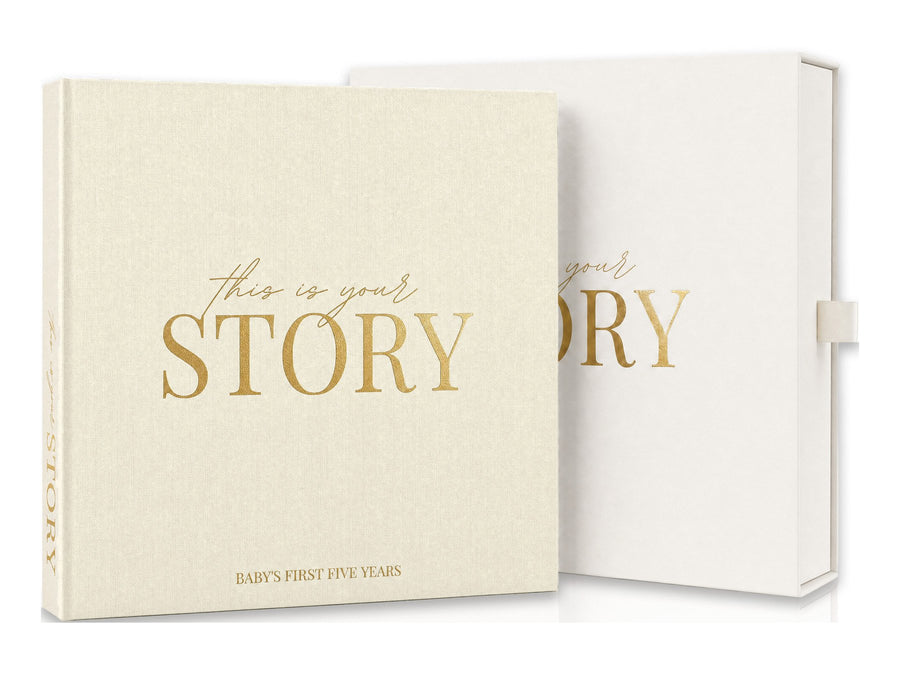
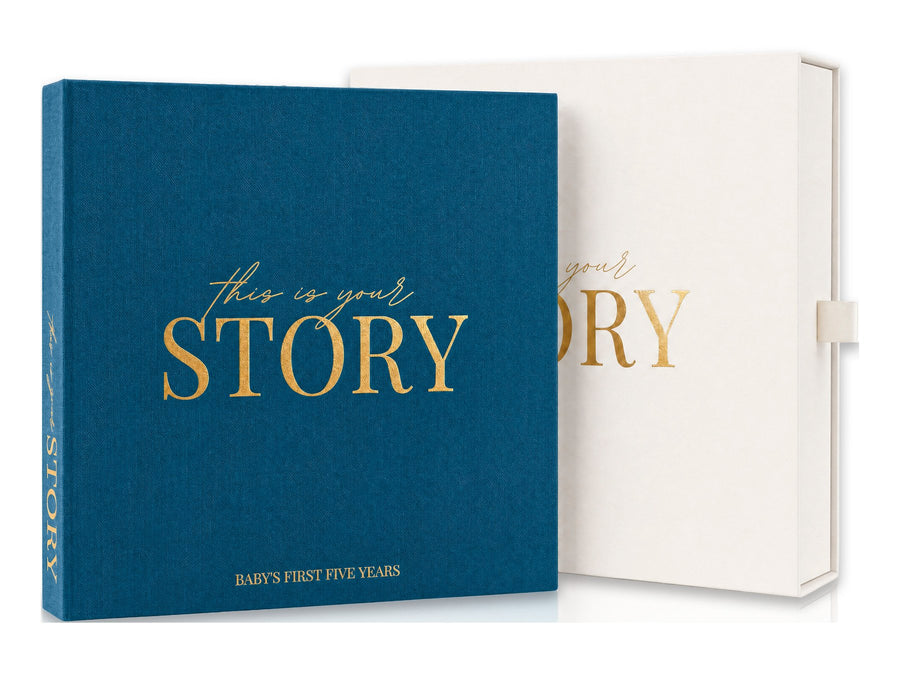
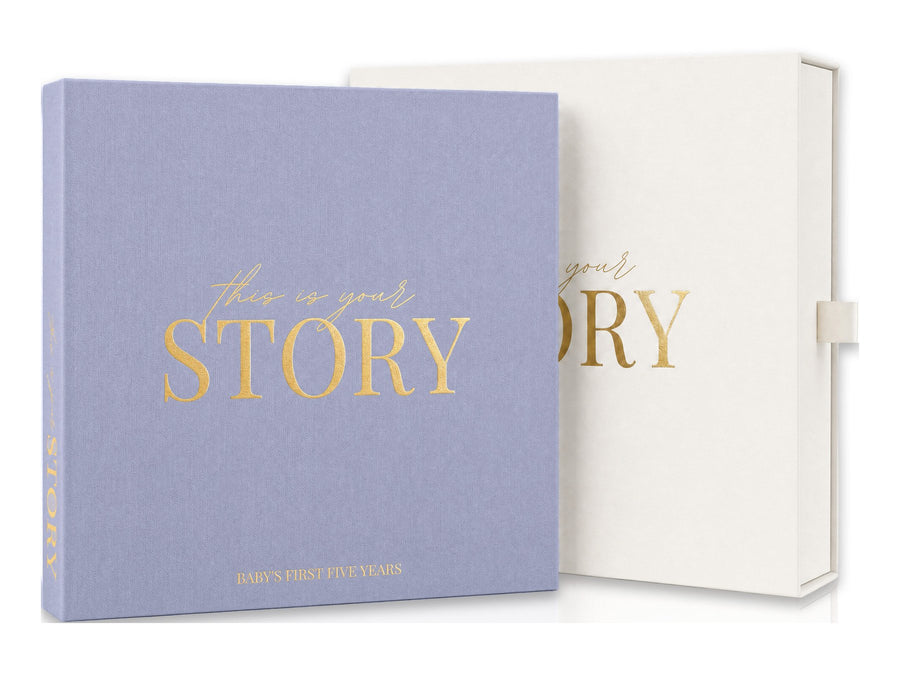
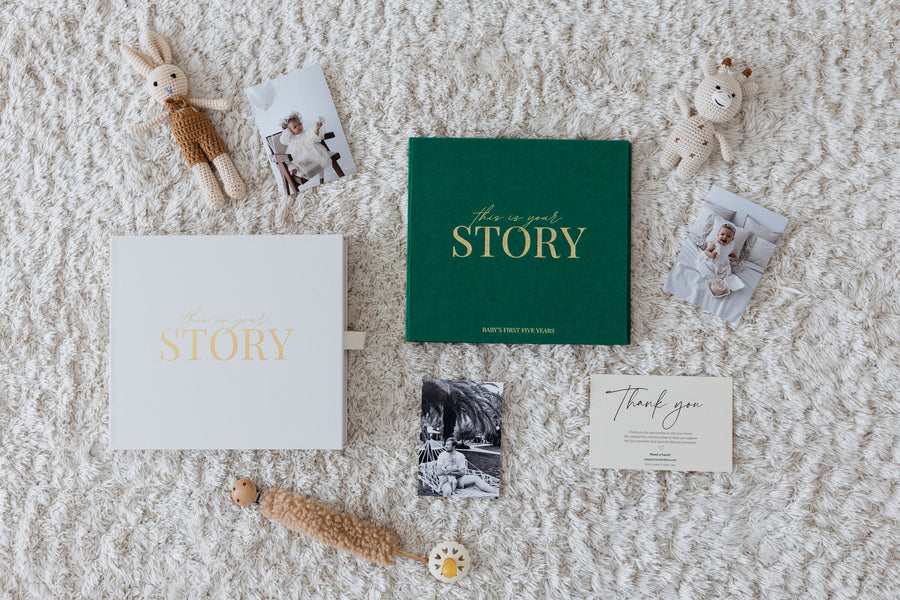
Flat, in its keepsake box, in a room you use. The box that the CheriBOO book arrives in is a rigid drawer box, and it is not packaging to throw away: it is the storage.
Flat matters more than people expect. A book with photos glued into it grows thicker at the outer edge than at the spine. Stored flat that is fine. Stored upright and half open on a crowded shelf, it leans, and the pages take a curve they keep.
The archival keepsake pocket holds the hospital bracelet and a lock of hair. Make sure both are completely dry before they go in, and keep the lock of hair in a small folded paper envelope inside the pocket so it stays together.
Where should the book live between sessions?
Flat, in its keepsake box, in a room you actually use. Avoid attics, basements, garages and any shelf that gets direct sun.
Should I digitize it?
Yes, once a year, and it takes under an hour. The original is the thing you hand over; the copy is what makes losing the original survivable.
- Open the book flat on a table near a window, out of direct sunlight.
- Photograph each finished spread from directly above, with the phone parallel to the page.
- Name each file with the page numbers, so the order survives.
- Keep one copy on a computer and one somewhere else entirely.
The hidden gold coil is what makes this easy: the book opens fully flat, so a spread photographs without a curved gutter swallowing the inner margin. There is no app and no digital version of the book itself, so the backup is whatever you make, which is also why nothing about it can expire with a company.
Do I need a scanner to back it up?
No. A phone held parallel to an open spread, in daylight but out of direct sun, is enough. The book opens fully flat, so the pages do not curve away from the camera.

When do I hand it over?
Whenever they have somewhere dry to keep it, which for most families means when they move out. Eighteen is the traditional answer and it works, partly because the book is already written to arrive at that moment: page 111 is a letter to my future self, and it is addressed to the person who will be holding it.
Two small things to do on the day. Write a final line and date it, so the last entry is the handover itself. And give them the box with it, because whatever they do with the book for the next decade, it will spend most of that time in storage.
None of this is complicated. Acid-free paper, an archival pen, corner adhesive, a closed box out of the sun, and one afternoon a year with a camera. The CheriBOO Baby Memory Book covers two of the five by construction, the acid-free 160 gsm paper and the rigid keepsake box, and adds 61 open photo spaces and an archival keepsake pocket, at $32.95 on cheriboo.com with free US shipping and 30-day returns. The pen, the adhesive and the afternoon are on you.